

Load cells are the key component behind precise industrial weighing. Learn what they are, how they work, the 5 main types, industry applications, selection guidance, common challenges, and installation & maintenance best practices.
Precision is critical in industrial measurement, no matter the industry. Whether you’re weighing raw materials at a sugar mill, tracking inventory in a manufacturing facility, or verifying axle compliance on a truck scale, load cells are the key component making it all possible.
At Michelli Weighing & Measurement, we know how critical it is to choose, install, and maintain the right load cell for your application. Let’s take a closer look at what load cells are, how they work, and why they matter.
What is a Load Cell?
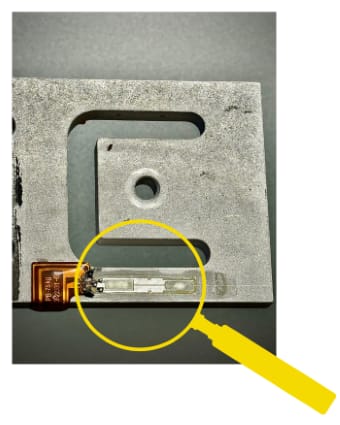
A load cell is a type of transducer — it converts force (typically weight, tension, compression, or pressure) into an electrical signal. This signal can then be read, measured, and interpreted. This is made possible through the use of strain gauges, which are bonded to the internal structure of the load cell.
When force is applied, the load cell slightly deforms, causing strain gauges to stretch or compress. This mechanical change alters the electrical resistance within the strain gauges, and that change is translated into a proportional voltage signal. That signal is then sent to a device like a scale indicator, Programmable Logic Controller (PLC), or control system for processing.
In industrial environments, precision and reliability are essential — making the choice of the right load cell just as critical.
How they work: Strain gauges bonded to the body of the cell deform slightly under load, changing their electrical resistance and generating a proportional voltage signal.
Types of Load Cells
There are many types of load cells, each tailored for specific applications. Here are the most common:
-
Single-Point Load Cells
Made to measure weight applied at a single, specific point — perfect for platform scales, retail scales, and small hopper weighing. Ideal for packaging, food processing, and logistics. -
S-Type Load Cells
Named for their S-shaped design, these versatile load cells can measure both tension (pulling) and compression (pushing) forces. Compact, robust, and suitable for many industrial and laboratory settings. -
Bending Beam / Shear Beam Load Cell
Compact, precise, and durable solutions for medium-to-heavy weighing tasks — especially where multiple load cells support a structure like a platform or tank. -
Double-Ended Shear Beam
Robust, high-capacity sensors ideal for demanding applications like truck and tank scales. Their symmetrical, dual-support design offers superior stability, accuracy, and resistance to harsh loading conditions. -
Canister Load Cell
Heavy-duty compression load cells built to handle extreme loads in rugged environments. Their high capacity makes them the standard in vehicle scales, silos, and industrial weigh systems.

Applications Across Industries
- Manufacturing: Batching, blending, process control.
- Agriculture: Silo weighing, feed bin monitoring.
- Transportation & Logistics: Truck and rail scales, axle load monitoring.
- Food & Beverage: Sanitary-scale systems for batching and packaging.
- Aerospace & Defense: Component testing, structural load monitoring.
Where precision matters, load cells make it possible!
Choosing the Right Load Cell
When it comes to selecting the right load cell, it takes more than just knowing the weight range. It’s crucial to choose a load cell with a capacity that fits your system’s maximum expected load, including a safety margin. The environment also plays an important role — things like moisture, chemicals, vibration, and temperature extremes affect the choice of materials and seal types.
Accuracy matters as well. For legal-for-trade or mission-critical applications, certified high-accuracy models are essential. Furthermore, keep in mind how the load cell will be mounted and how the force will be applied, since side loads or misalignment can lead to errors. If your application requires certifications like NTEP, OIML, or ATEX, be sure to select a load cell that meets these requirements.
Common Challenges — and How to Avoid Them
Load cells are durable, but they can still run into trouble if not properly selected or maintained. Common issues include:
- Signal Drift due to environmental changes.
- Mechanical Misalignment leading to inaccurate readings.
- Overload or Shock Loading, which can permanently damage the sensor.
- Electrical Interference if not properly grounded or shielded.
At Michelli, we routinely help customers troubleshoot these problems — and prevent them with proper setup and training.
Installation & Maintenance Tips
For industries relying on precise weight measurement, maintaining load cell accuracy hinges on a few critical best practices that begin at installation. First, ensure load cells are mounted on clean, level, and rigid surfaces, free from vibration or structural deflection, to prevent signal noise and measurement distortion. Proper mounting hardware — such as matched load buttons, clevis assemblies, or self-aligning mounts — should always be used to ensure consistent force transmission and avoid side or moment loading.
Furthermore, calibration and routine maintenance are not just recommended — they are essential for ensuring continued measurement accuracy and process reliability. Over time, even high-quality load cells can experience signal drift due to mechanical fatigue, temperature fluctuations, electrical interference, or minor structural shifts in the mounting system. Without regular calibration, these deviations can accumulate, leading to significant errors in weight readings that may impact product quality, batching accuracy, compliance, or safety. Scheduled calibrations — ideally traceable to national or international standards — help catch these issues early and validate that your system is still operating within specification. Preventive maintenance routines, including visual inspections, cable integrity checks, and verification of mechanical restraints, can extend the service life of the load cells and minimize unplanned downtime.
Need help installing or servicing a load cell? Our certified technicians across the U.S. can help.
Why Work With Us?
With decades of experience and locations across the country, Michelli Weighing & Measurement offers more than just load cells — we deliver full weighing systems, custom solutions, and on-site support from our corporate headquarters in the greater New Orleans area all the way to your facility, wherever it may be.
Whether you’re upgrading a hopper, solving scale issues, or designing a brand-new process, Michelli brings the expertise you need to achieve unmatched accuracy, maximize efficiency, and stay fully compliant. As your trusted precision partner, we’re committed to empowering your operations — helping you work smarter, faster, and with complete confidence every step of the way. Reach out today.
