
March 23 marks the birthday of a pioneer whose name is seldom spoken outside the halls of her beloved Swarthmore College. Yet, along with educating generations of students, Susan Jane Cunningham (1842–1921) was an architect of modern scientific discipline. Long before ISO standards or specialized industrial calibration laboratories existed, there were observatories. In these sacred spaces, scientists like Cunningham practiced the earliest, most grueling forms of precision measurement.
For Cunningham, accuracy in measurement wasn’t an academic pursuit. It was her whole life.
Building a Foundation for Discovery
Born in Maryland and raised by her grandparents, Cunningham’s life was defined by a steadfast dedication to both her students and the pursuit of knowledge. While she had limited formal higher education herself, spending just a single year as a “special student” at Vassar College working with the famed astronomer Maria Mitchell [1], she was determined to build a scientific learning infrastructure that would endure.
In 1869, at the age of 27, Susan became one of the founding faculty members of Swarthmore College in Pennsylvania. She started as an instructor in the mathematics department and went on to found the college’s astronomy department, being appointed the college’s very first Professor of Astronomy. She headed both these departments until her retirement in 1906 [2].
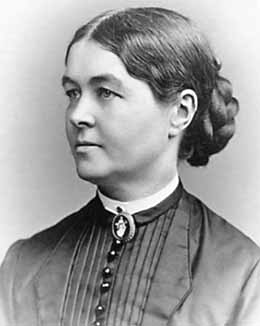
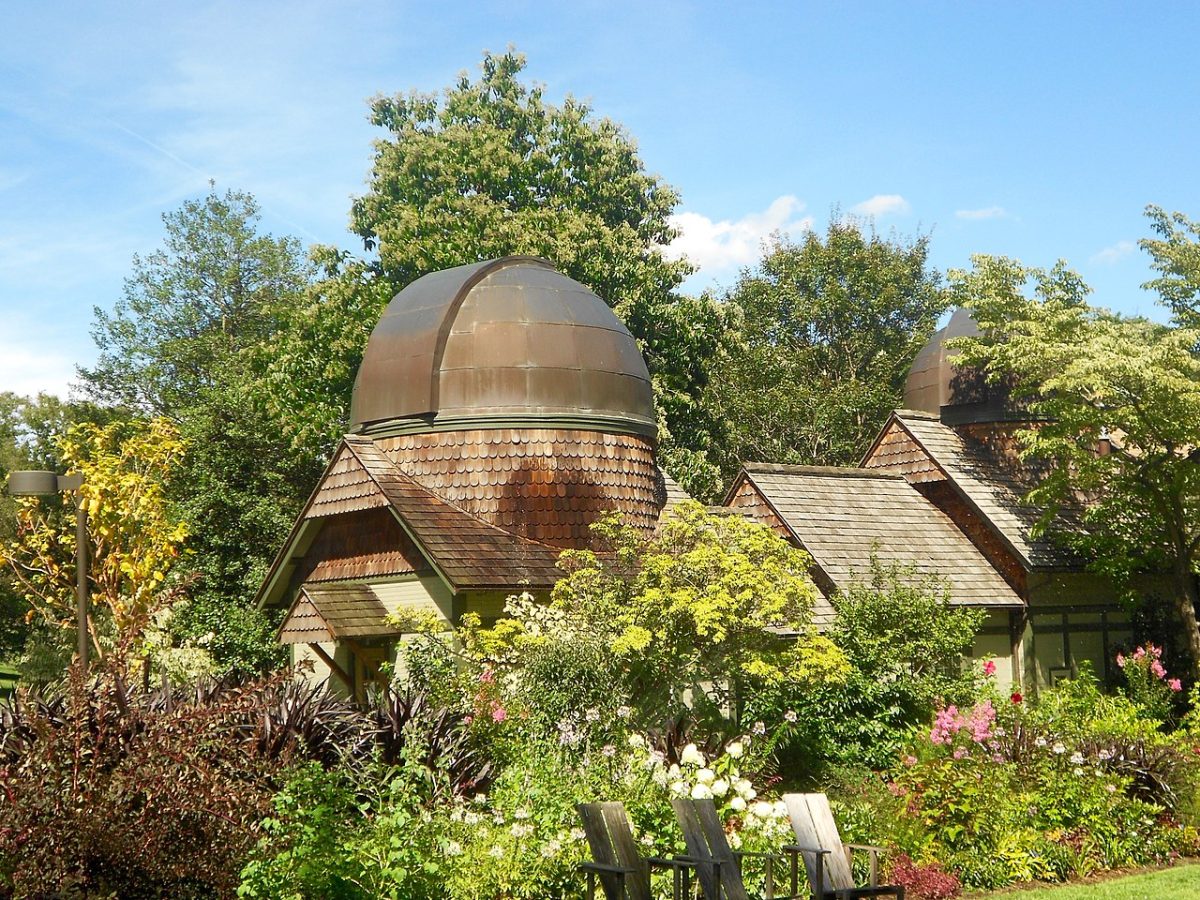
For the next four decades, aside from a few summers spent studying at various observatories in the U.S. and U.K., she dedicated herself to the College completely. After nearly two decades, Susan Cunningham decided that she needed suitable apparatus for teaching practical applications of astronomical principles. She petitioned the Board of Managers in 1888 to plan and equip an observatory [5]. When funds were secured, she led development of the observatory. Once complete, she didn’t just use it for teaching. She moved in [1].
The original Cunningham Observatory became her home, her laboratory, and her sanctuary [3]. In its central dome stood a six-inch equatorial refracting telescope, alongside a transit instrument, mean-time clock, and chronometer, and a variety of other precise measurement instruments—all demanding ultra-precise calibration and daily care [4]. Here, she cultivated the intense attention to detail that is now the backbone of every modern metrology and calibration lab.
From the Classroom to the Edge of the Galaxy
When Cunningham founded those departments, she wasn’t teaching students how to solve equations. She was training them to apply scientific and mathematical principles in a way that advances the whole of human knowledge. Her legendary rigor became the defining feature of the departments [1]. This culture of exactness outlasted her, transforming Swarthmore into a global powerhouse of observational science that would eventually redefine our place in the universe.
The foundation of uncompromising precision she laid birthed exceptional scholars, with some being responsible for major astronomical leaps:
The Mother of Hubble
One of the most profound branches of Susan Cunningham’s academic tree is Nancy Grace Roman (Class of ’46). Roman went on to become NASA’s first Chief of Astronomy and the driving force behind the Hubble Space Telescope. The precision Cunningham demanded in the 1890s became the standard Roman used to advocate for a telescope above the atmosphere. Nearly every iconic image of a distant nebula we see today, including most of the pictures that form our collective understanding of what’s out there, in a way descends from the excellence Cunningham sparked [5].
The Hunt for New Worlds
Building on Cunningham’s foundation, Swarthmore’s Sproul Observatory (established in 1911) became a world leader in astrometry—the precise measurement of stellar movement. In the mid-20th century, researchers like Sproul Director Peter van de Kamp meticulously tracked minute “wobbles” in the paths of nearby stars like Barnard’s Star. While his specific planetary claims were later attributed to fractional instrument errors, his painstaking pursuit of astrometric measurements laid the foundation for modern exoplanet discovery [6].
Mapping the Invisible
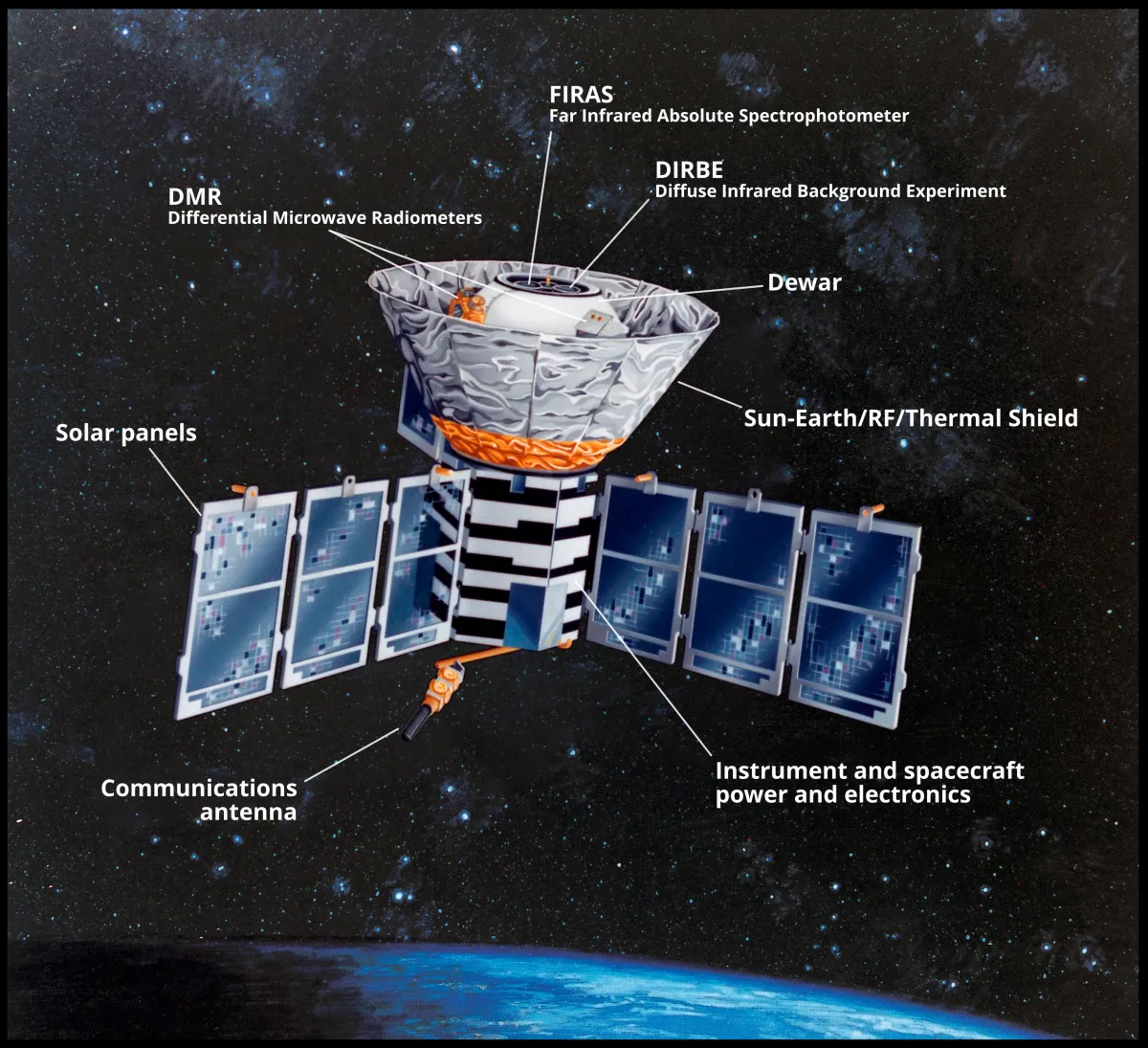
One Swarthmore alumni, John Mather (Class of ’68), who won the Nobel Prize in Physics, took the department’s obsession with measurement to the very beginning of time. Mather led the COBE satellite mission, which measured the Cosmic Microwave Background radiation with incredible precision that allowed us to build a greater understanding of the early universe [7].

The Human Cost of Precision
While the culture she created changed our conception of space, the ending of Susan Jane Cunningham’s story is a reminder of her total, consuming devotion. She never married, and she had no children, devoting her life to the observatory she helped create [1]. The college, its students, and its instruments were her only family.
When she passed away from heart failure in 1921, her funeral was attended by many who spoke of her incredible impact on the College. The Dean of Swarthmore spoke on her dedication to the school above even her own well-being [1]. In the end, she didn’t leave behind a traditional estate. She left behind a better understanding of the heavens, a legion of brilliant minds. Every time a modern scientist calculates the distance to a far-off sun, or a technician calibrates a scale to a fraction of a gram, they are relying on the mathematical rigor that Susan Jane Cunningham embodied in her life.
Because of her, the stars are a little closer, and the world is a lot more precisely known.
Want your measurements to be precisely known? Give us a call!
With technicians, accredited laboratories, and mobile service trucks
across 50 locations in 18 states, we can help.
References
- O’Connor, J.J. and Robertson, E.F. “Susan Cunningham.” MacTutor History of Mathematics Archive, University of St Andrews. Available at: https://mathshistory.st-andrews.ac.uk/Biographies/Cunningham_Susan/
- Wikipedia Contributors. “Susan Jane Cunningham.” Wikipedia, The Free Encyclopedia. Available at: https://en.wikipedia.org/wiki/Susan_Jane_Cunningham
- Swarthmore College Computer Society. “Susan Jane Cunningham.” Swarthmore College History. Available at: https://www.sccs.swarthmore.edu/users/98/elizw/Swat.history/Cunningham.html
- O’Connor, J.J. and Robertson, E.F. “Swarthmore College Observatory.” MacTutor History of Mathematics Archive, University of St Andrews. Available at: https://mathshistory.st-andrews.ac.uk/Extras/Swarthmore_observatory/
- NASA. “Nancy Grace Roman: The Mother of Hubble.” NASA.gov. Available at: https://science.nasa.gov/people/nancy-roman/
- 1963: Astronomer Peter van de Kamp Discovers Planetary System.” A Brief History of Swarthmore. Available at: https://www.swarthmore.edu/a-brief-history/1963-astronomer-peter-van-de-kamp-discovers-planetary-system
- The Nobel Prize. “John C. Mather – Biographical.” NobelPrize.org. Available at: https://www.nobelprize.org/prizes/physics/2006/mather/biographical/.