
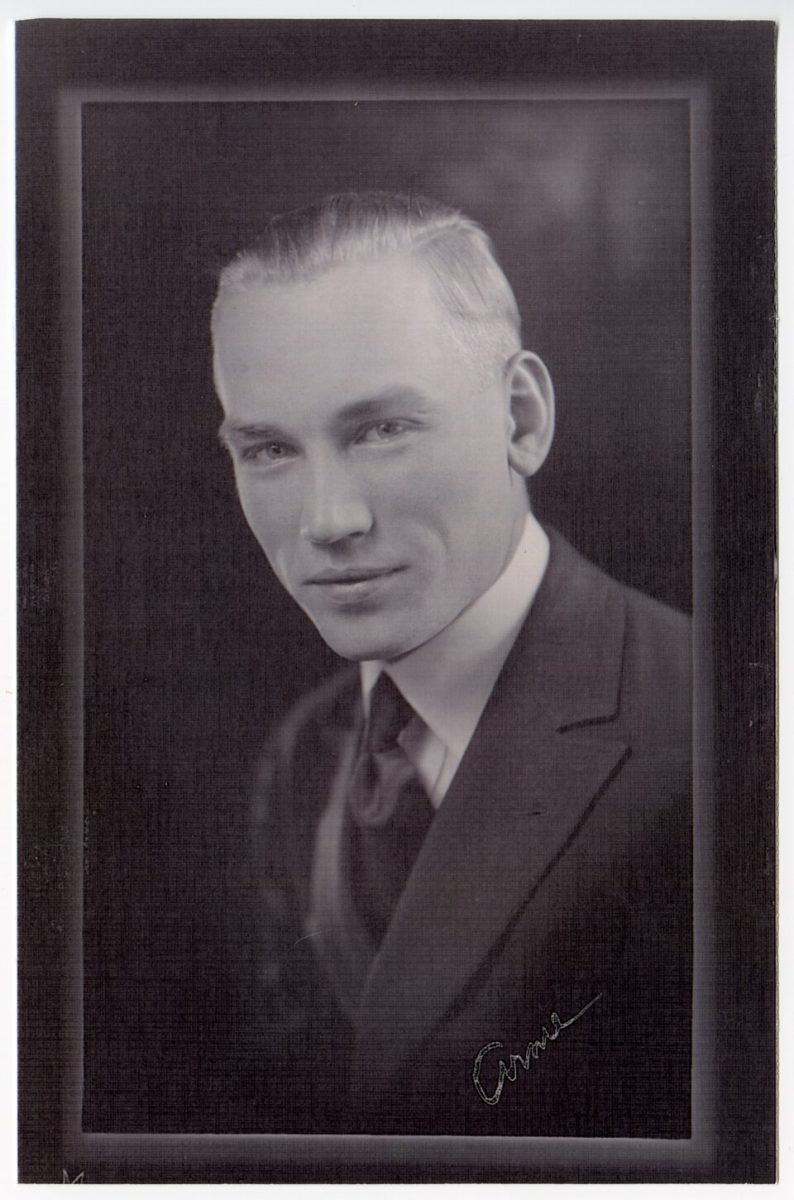
April 10 marks the birthday of Arnold Orville Beckman (1900-2004), a man who changed the landscape of modern chemistry and laboratory science forever. While you may not know his name, his inventions are used heavily in laboratories, manufacturing plants, and food processing facilities. His achievements have touched nearly every aspect of our lives.
Beckman was a chemist, an inventor, and a true pioneer in his field. Before the days of digital readouts, measuring the acidity or alkalinity of a substance was a slow, messy, and often inaccurate process. Beckman changed all of that with a single invention, laying the groundwork for the modern laboratory instruments we rely on today.
The Citrus Situation that Seeded New Science
Born in Cullom, Illinois, Beckman developed a fascination with science early in life when he found a chemistry manual in his family’s attic. This childhood curiosity led him to the California Institute of Technology (Caltech), where he eventually became a professor [1].
In 1934, Beckman was approached by a former classmate who was working for the California Fruit Growers Exchange [2]. The company had a problem: they were trying to turn unsellable lemons into profitable byproducts like pectin and citric acid, but they needed a reliable way to measure the acidity of lemon juice. The traditional method using litmus paper was failing miserably because the sulfur dioxide used as a preservative in the juice bleached the paper, making it impossible to read [3].
They needed a precise, reliable, and durable measurement tool. Beckman stepped up to the challenge.
The Birth of the pH Meter
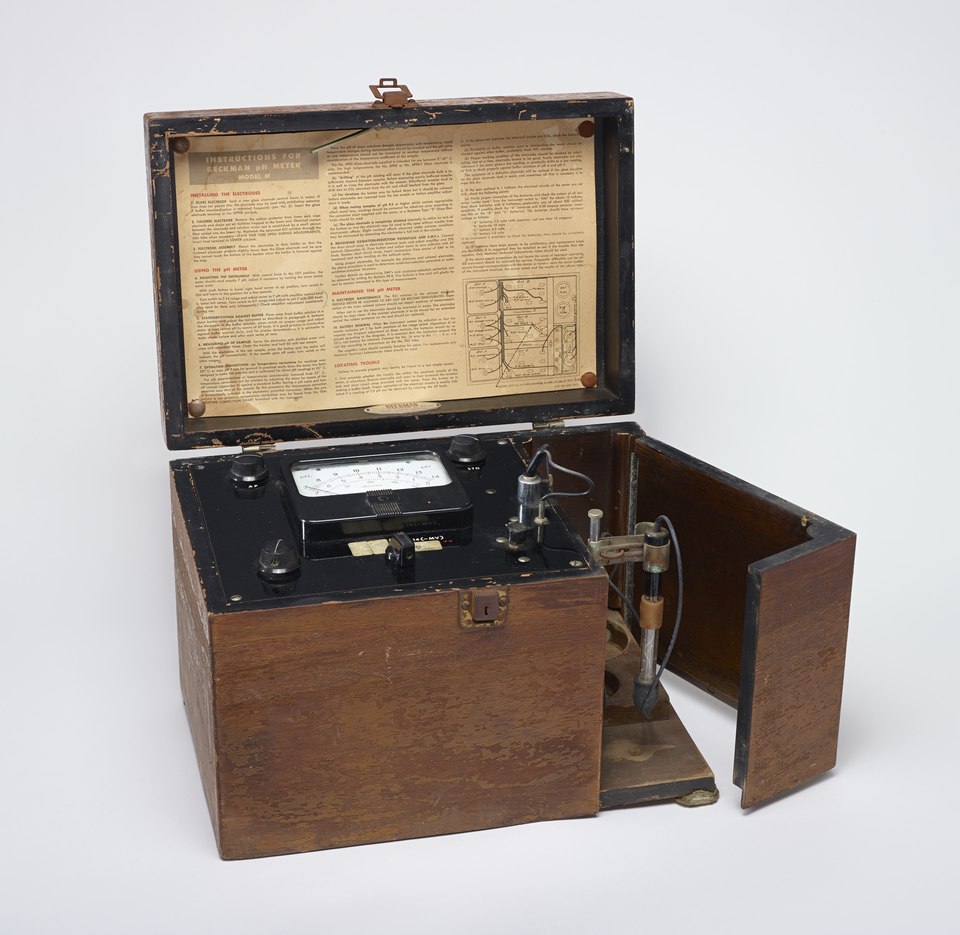
Beckman applied his knowledge of chemistry and electronics to build a device that measured the voltage produced by two electrodes placed in the lemon juice. By amplifying the tiny electrical signal using vacuum tubes, his device could accurately read the exact acidity of the liquid [3].
He called his invention the “acidimeter,” which was later renamed the pH meter.
For the first time in history, scientists and manufacturers could measure pH with incredible accuracy, speed, and reliability. Beckman’s pH meter replaced guesswork with exact, quantifiable data.
Building a Legacy of Measurement
Realizing the massive potential of his invention, Beckman left his teaching position to found National Technical Laboratories (which later became Beckman Instruments) [2]. He didn’t stop at the pH meter. He went on to invent the DU spectrophotometer, a device that allowed scientists to easily determine the chemical composition of substances by measuring how they absorb light [3].
His instruments were so accurate and revolutionary that they were used in everything from synthesizing vitamins to early DNA research [4]. He transformed the laboratory from a place of rough estimation into a place of ultra-precise measurement.
A Commitment to Uncompromising Accuracy
Arnold Beckman understood what we at Michelli Weighing & Measurement understand today: without accurate measurement, progress is impossible. Beckman lived to be 104 years old, leaving behind a legacy of philanthropic foundations and scientific institutes [1]. But his greatest legacy is the culture of precision he brought to the scientific community. Every time a modern technician calibrates a piece of analytical lab equipment, or a manufacturer tests a product for safety, they are relying on the culture of exactness that Beckman helped build.
Because of him, our science is better, and scientists can make objective judgements of pH based on a numerical indicator rather than subjectively judging color.
Looking for more precise measurement in your operations?
Michelli Weighing & Measurement provides expert calibration for precision measurement devices, environmental equipment, and more.
References
- Arnold and Mabel Beckman Foundation. “Arnold O. Beckman.” Beckman Foundation. Available at: https://www.beckman-foundation.org/about-foundation/arnold-and-mabel-beckman/
- Science History Institute. “Arnold O. Beckman.” Science History Institute. Available at: https://www.sciencehistory.org/historical-profile/arnold-o-beckman
- American Chemical Society. “Development of the Beckman pH Meter.” National Historic Chemical Landmarks. Available at: https://www.acs.org/education/whatischemistry/landmarks/beckman.html
- Encyclopedia.com. “Arnold Orville Beckman.” Complete Dictionary of Scientific Biography. Available at: https://www.encyclopedia.com/science/dictionaries-thesauruses-pictures-and-press-releases/beckman-arnold-orville